When in eighteenth-century England began the process which history know as the industrial revolution, the development of the world clearly accelerated. Within a relatively short period of time, people began to gain momentum, which led us to the next big breakthroughs. Are we on the threshold of the fourth great change? Or maybe this is already happening before our eyes?
Table of Contents
The above-mentioned industrial revolution was the first such breakthrough. It was then that the process of mechanization began, which completely changed the production process and led to irreversible changes in the industry. The second revolution related to electrification brought further changes. It took place in the second half of the nineteenth century and at the beginning of the last century, when the first lines began to appear in production plants, and mankind learned about such inventions as, for example, the telephone (1876), the light bulb (1879) or the radio (1908).
Automotive, electrification and digitization
In addition to the electrification of the biggest changes brought, in turn, the development of the automotive industry, which - coincidentally - the driving force was the first in the world crude oil distillation by Ignacy Lukasiewicz, followed by the invention of Etienne Lenoir gas engine. This, in turn, was the foundation on which Benz, Daimler, Goodyear, and finally the Wright brothers then built, fueling industrial development in almost every aspect in a very short time.
The third industrial revolution brought further changes. While the previous two were the catalyst for the incredible increase in production and employment, the latter gave the opportunity to improve the entire industrial process by improving its quality on almost every section and ultimately increasing the scale of automation. Increasingly, the benefits of digitization have been used, which have captured the minds of technological designers and visionaries of modern times.
The high level of automation, the introduction of advanced IT systems as well as machine microcontrollers started to drive the development and took us relatively quickly to the place where we can talk about Industry 4.0.
Time for the fourth step!
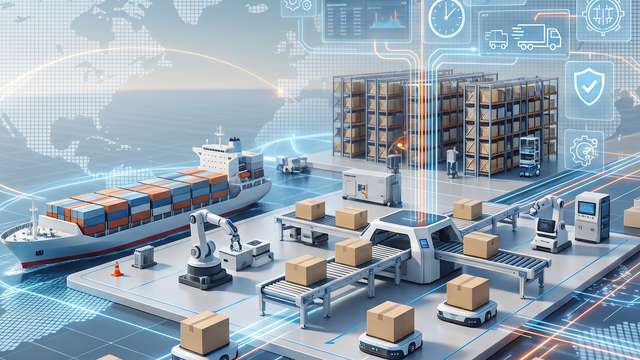
This is, of course, a very general concept that really covers a lot. While earlier revolutions were marked by mechanization, electrification, and digitization, the fourth - which is taking place before our eyes - concerns a kind of integration of human resources, as well as digitally controlled machines, networks and information technologies. In short, it can be said that the whole idea of the industrial revolution 4.0 is based on a kind of unification of several worlds. This virtual and informative, with technological and productive.
- It is best to think of all of this as the digitization of production, where digital devices and technological systems are interconnected, including via the Internet, where large amounts of production data are exchanged and analyzed, explained Zbigniew Piątek, the creator of the Przemysl-40.pl. portal, in an interview with the Rzeczpospolita.
In his opinion, the set of concepts that constitute a component of a wider definition is really capacious. - The whole concept is a kind of conceptual aggregate covering a number of new technologies. Such are, among others computing clouds, artificial intelligence, Big Data analysis, augmented reality and finally collaborative robots - he added.
Play green
But why are we talking about the industrial revolution 4.0? In addition to the purely industry issue, which is completely natural due to the distribution of industrial automation parts, it is worth paying attention to another quite important aspect. In a month when we put a strong emphasis on ecology and solutions that allow us to contribute a brick in the context of caring for the environment, it seems indispensable to focus on the subject of revolutionary changes that offer a specific solution.
Improving the production process and the functioning of the so-called smart factories is a simple goal to minimize the share of the human factor, as well as reduce the burden on the environment. Moreover, it is one of the main challenges that are taking place outside our eyes. This goal was even properly formalized in the relevant document of the United Nations of 2015 called "Transforming Our World: The 2030 Agenda for Global Action”.
The entire document deals with many different aspects, but this most important point seems to be the pressure on states to focus on sustainable development and modernization of infrastructure, and finally all bills on environmental protection.
Industry 4.0 tempts not only with very specific benefits, such as avoiding production downtime or saving money, but also those that are not looked at in the first place when planning long-term. Reducing energy costs and carbon dioxide emissions are issues that immediately stand out. In this case, the positives of the changes are appreciated not only by the states that create detailed legal acts that can be used to define certain matters. More and more often, entrepreneurs themselves come out with their own initiatives, who do not wait for the "compulsion" in the form of regulations, and take advantage of new technologies on their own, knowing that such actions will pay off in the long run. It is worth remembering that consumers are very often guided by their beliefs when investing their own money and more and more often choose companies that have related philosophies, for example ecological ones.
The path we have entered seems to be one from which there is no turning back. The development of digital technologies that are used in industry and are implemented with more and more force each year, have a significant impact on the fact that industry and the natural environment live in close symbiosis.