The Joe Biden administration, in the final straight of its term, has introduced further sanctions restricting exports of advanced semiconductors and technology to China. Such a move, motivated by competition for global technological dominance, has sent powerful shockwaves throughout the industrial automation industry.
Table of content
Will companies manage to adapt to the new reality, in which dependence on China is becoming increasingly risky? Experts agree on this topic - it's a moment that could turn the tables and redefine the future of the sector for years to come.
Sanctions and shocks
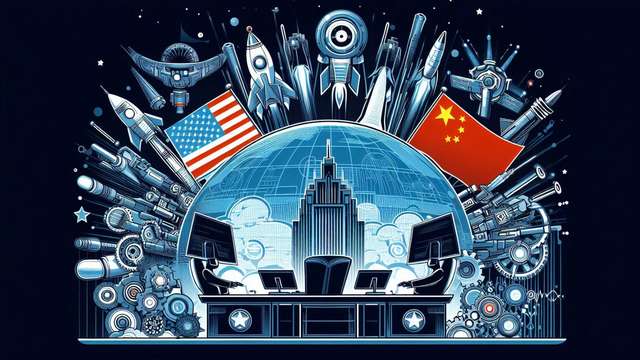
The U.S. decision to tighten sanctions against China is another step in the escalating technology war between the world's two largest economies. The restrictions focus on key components, namely advanced chips, AI technologies and semiconductor manufacturing machinery.
As Professor Michael O'Connell of MIT notes, the sanctions not only put pressure on China, but also force global technology companies to analyze their dependence on the Middle Kingdom - he said, as quoted by “Reuters.”
- Automation, which is driven by IoT technologies and advanced robotics, faces a fundamental challenge today - how to secure the supply of key components in the face of this uncertainty - he added.
Domino effect
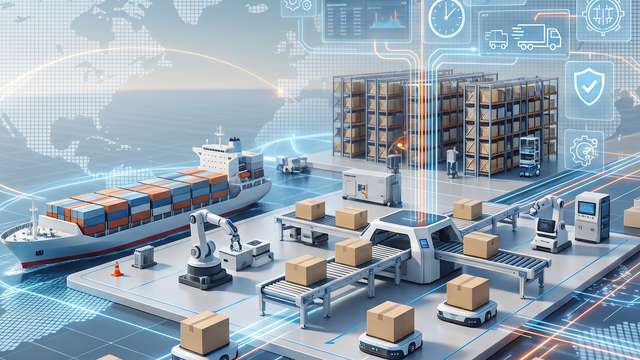
The aforementioned sanctions had an immediate impact on global supply chains. Chinese tech giants Huawei and SMIC have been cut off from critical resources, translating into delays and problems for manufacturers around the world. One example is Foxconn, which has already announced delays in the delivery of key industrial robots to its European customers.
Experts point out that the biggest challenges lie ahead for medium- and small-sized companies, which don't have the resources to switch supply chains quickly. At the same time, large corporations such as Siemens and ABB are announcing plans to diversify their suppliers. It is worth recalling that the industrial automation sector is extremely dependent on a stable supply of technology - from microprocessors to sensors and control modules.
A time of great challenges
Large corporations are already responding to the new reality. Siemens Digital Industries has announced plans to build new semiconductor plants in Europe, and Intel is increasing production at its U.S. plants in Arizona.
This is part of a global trend to “localize” technology production. As Dr. Rebecca Taylor, an analyst at the Center for Strategic and International Studies, explains, companies need to invest in alternative sources of supply.
- This process, however, is neither quick nor cheap. In the short term, we can expect component prices to rise and automation projects to be delayed - she said during an interview with “Bloomerg".
However, there is no shortage of optimistic voices. John Mitchell, CEO of the American Electronics Industry Association, believes the situation could become a catalyst for innovation - The new reality requires companies to be creative. Sanctions are forcing the industry to develop new technologies and reduce dependence on Chinese industry. This is an opportunity to create more resilient supply chains - he said.
The beginning of a new era
The U.S. sanctions against China represent an unprecedented moment in the history of the global technology economy. While the challenges are immense, the industrial automation industry has an opportunity to emerge stronger. Cooperation, innovation and flexibility to adapt will be key. As history shows - it is in times of crises that the greatest changes are born.
Will companies be able to meet these demands? The answer lies in the decisions that will be made today.