Christmas under threat? Sounds threatening enough, but the news coming out of distant Panama does not inspire optimism, especially with the holidays approaching.
Table of Contents
What exactly is at stake? About the problems we have been witnessing for some time now on one of the world's most important trade routes - the Panama Canal.
Nature against man
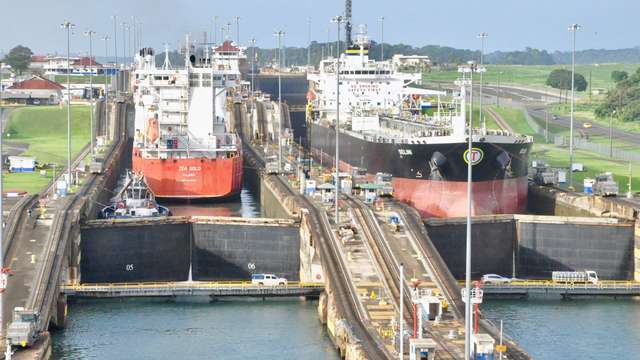
As The Economist reports, there has been a very serious blockage on this key international sea route. Hundreds of ships, including some of the largest container ships, stand at anchor, waiting for their chance to sail on.
As recently as July, the Panama Canal's capacity was as high as 32 ships a day, while since early December only about 22 ships can sail the route.
Why the problem? Has there been, as in the case of the Suez Canal, the entry of some giant vessel into the shallows? Nothing of the sort. This time mother nature herself turned against man. For the area around the route has been hit by a drought, which has led to the biggest drop in water levels in the Panama Canal since the mid-1950s.
Queues counted in weeks
Ships are thus waiting in huge queues - sometimes for weeks at a time. - These delays obviously affect supply chains. This in turn is of great concern to companies, but also to consumers - said Marco Forgione, director of the Institute of Export and International Trade (IOE&IT).
The capacity problems of the Panama Canal are being followed very closely not only in the United States, but also in Europe. After all, when we talk about supply chains, we're not only talking about the delivery of raw materials, but also - and perhaps especially - food and entire containers of gifts, which in the context of the aforementioned Christmas holidays is of colossal importance.
- Ships may have to travel longer distances and opt for alternative routes to reach their destination ports - Forgione continued. - All this could lead to gaps in store shelves, from Christmas socks to dinner products, leaving many families without goods - he added.
Who will pay for this?
Clearly, such serious problems with the Suez Canal will also generate certain costs. Already today, it has been reported that shippers will incur additional expenses of millions of dollars just to get around the queues.
It is speculated that the obstructions may last until the end of the year, but this is an optimistic assumption. A pessimistic scenario says that the Panama Canal's capacity may only decrease and in 2024 will be: 20 per day in January and just 18 in February.
What's more, the organization that manages the route is already reporting that partial obstruction of ship passage could last as long as 2028.