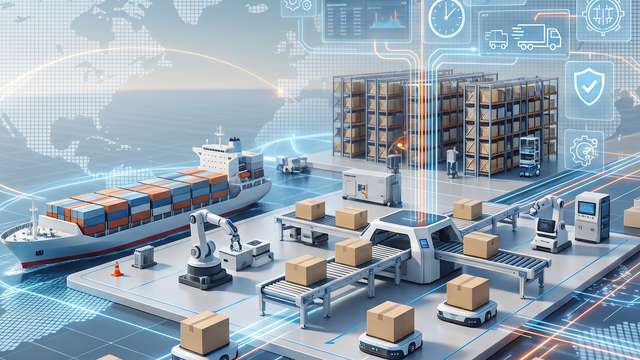
Modern industry no longer resembles the smoking chimneys of history books. Today, it consists of sterile halls where algorithms race against time, and every second of downtime costs a fortune. Yet, behind this facade of modernity lies a powerful paradox: we have increasingly better machines, but fewer hands to operate them.
Table of content
A visit to Hannover Messe 2024, the mecca of world industry, makes one thing clear - the era of "hiring more hands" is gone for good. The German giant Rittal, well-known to Polish engineers, put it plainly: scaling production must happen through the automation of automation itself.
The digital twin: not a gadget, but an insurance policy
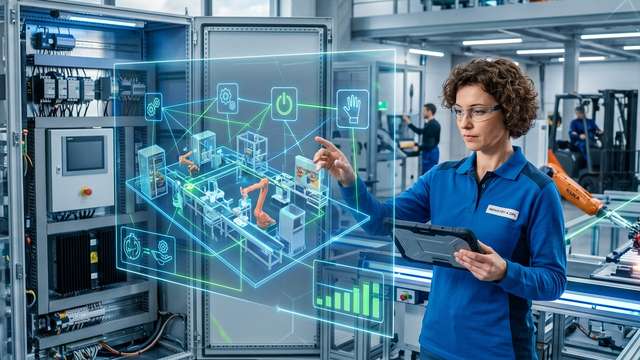
A key element that electrified the exhibition halls was the integration of the Eplan and Rittal ecosystem. This is not just about designing control cabinets, but about creating a full "Digital Twin." In practice, this means that before a single enclosure is even built in a Polish plant, the entire process of pre-fabrication, wiring, and assembly has already been virtually optimized.
This is a breakthrough for the Polish SME sector, which until now often relied on a "we'll figure it out" craft approach. Today, with drastically rising energy and raw material costs, the margin for error is zero. Solutions like the RiPanel Processing Center allow design data to be sent directly to CNC machines, reducing cabinet production time by up to 80%. In a country lacking nearly 400,000 industrial workers, such efficiency is not a luxury - it is a condition for survival.
The end of the "cheap labor" era - time for process intelligence
Polish manufacturing companies are ending the first half of 2024 with bittersweet sentiments. On one hand, we still feel the slowdown in Germany - our main trading partner; on the other, wage pressure and demographics are forcing a leap forward. Data from the Polish Chamber of Commerce is relentless: employment in the corporate sector is falling, and the generational gap is becoming a void that simple migration can no longer fill.
Technologies shown in Hannover, from autonomous warehouse systems to intelligent cooling for RiLine Compact cabinets, hit the most sensitive spot - operating costs (OPEX). Polish industry must stop competing on low wages, because they simply stopped being low. Our new currency is flexibility and speed of implementation.
What do the experts say?
Experts have no illusions: automation must stop being seen as a threat to people and start being treated as their only support.
Tomasz Haiduk, President of the Polish Automation and Robotics Forum:
"Contrary to fears that robots will only displace human workers, robotization can be deeply 'human-centric.' It is about a 'technology’s nod toward humans,' freeing people from monotonous, physically demanding, or dangerous tasks. The goal is to transform the human role from a cog in the machine into a creative manager and supervisor of automated processes."
Stefan Życzkowski, Chairman of the Supervisory Board at ASTOR:
"Automation aimed at improving work efficiency has been a highly desirable phenomenon in industry since the time of Henry Ford... The goal of automation remains a radical improvement in efficiency and relieving humans of repetitive and tedious tasks, of course, only when it has a business justification. Most Polish manufacturing companies spend 10 times more on people than on equipment, which means we have great automation potential in them."
Engineer 5.0: the conductor instead of the craftsman
The conclusions from Hannover are clear: the future belongs to modular systems that can be "clicked" like Lego bricks, instead of hours of welding and drilling. Rittal's innovations are a signal to Polish plants that automation is entering the "Plug & Play" stage.
If Polish companies want to maintain their position in the European supply chain, they must invest in digitalization at the planning stage. The fight against labor shortages is not about desperately looking for new employees, but about unlocking the potential of those we already have.