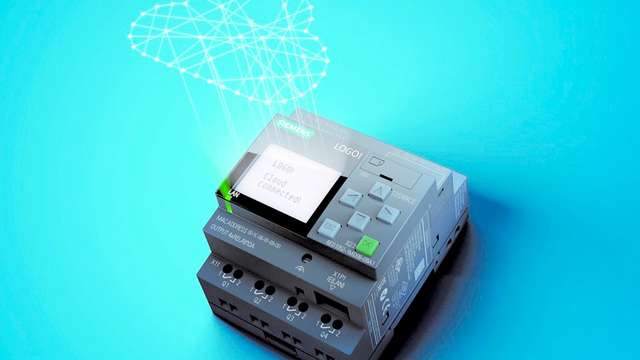
For decades, the heart of every production hall was the control cabinet, and within it - proudly mounted on a DIN rail - the physical PLC controller. For an automation engineer, this sight was a synonym for stability and reliability. However, the beginning of 2026 has brought a fundamental shift in this paradigm. During recent industry events, spearheaded by the "all about automation" exhibitions in Germany, all eyes were on control system virtualization.
Table of content
The concept of Software-Defined Automation (SDA) has moved from a futuristic vision to a real-world tool that is redefining industrial efficiency.
Breaking the "iron" constraints
Traditional automation has always hit a glass ceiling: the physicality of the hardware. Expanding a production line meant purchasing new modules, fighting for cabinet space, and dealing with complex wiring. A virtual controller, such as the revolutionary SIMATIC S7-1500V, moves the control logic to a software level running on Industrial PCs (IPCs) or Edge servers.
What does this mean in practice?
- On-Demand Scalability: Need to handle a more complex process? You don’t replace the CPU - you simply allocate more processing power or memory to the virtual controller.
- Digital Twin 2.0: You can run the controller code in the cloud and test the entire production line before a single physical machine is even built. This reduces commissioning time by over 30%.
- IT Standards in the OT World: With virtualization, PLC programming begins to benefit from IT best practices, such as automated backups, version control (Git), and rapid security updates without halting the entire factory.
Cybersecurity and real-time performance - addressing the doubts
The most frequent question asked in the corridors of industry summits is one of reliability. Can a "piece of software" be as stable as a "silicon block"? The answer is a resounding yes. Thanks to Real-Time Operating Systems (RTOS) and advanced communication standards, Siemens virtual PLCs maintain a time determinism identical to their physical counterparts.
Furthermore, centralizing control makes it easier to defend against cyberattacks. Instead of securing a hundred distributed devices, focus is shifted to protecting a single, robust server cluster.
A transformation built on partnership
The transition to a virtual model doesn't happen overnight. Industry 4.0 (or rather Industry 5.0, which we are hearing so much about in 2026) is a hybrid process. Even the most advanced factories still require physical I/O modules, valve terminals, and reliable central processing units to act as the backbone of the system at critical production nodes.
In this era of transformation, access to proven components is vital. Whether your company is moving toward full virtualization or modernizing an existing fleet based on trusted Siemens SIMATIC solutions, a consistent supply chain is the foundation of success.
This is where experts who understand that every minute of downtime counts in automation come into play. Professional support in selection and fast access to components is the only way to keep up with the pace set by today’s technology. Companies like Automation Trader have proven for years that even in a world increasingly dominated by software, solid hardware available "off-the-shelf" remains the fuel that drives innovation.
Summary: Are you ready for virtualization?
We will remember 2026 as the moment the line between code and machine finally blurred. Virtual PLCs are not just about saving space and costs-they are, above all, about the design freedom that engineers have dreamed of for decades.
The future of automation is flexible, scalable, and... virtual. But its heart still beats to the rhythm of reliable components that build our daily industrial reality.