
In recent years, reliability and complexity of machines have dramatically increased. Unfortunately, this development did not include the methods of fixing and routing wires, which have not changed properly since the 1960s.
At the same time, most experts agree that one of the most important mistakes made by designers is underestimating the issue of cable routing. At a conference organized by the Robotic Industries Association (RIA), it was found that cable problems are one of the main causes of downtime in industrial plants. Problems start with tangled and twisted cables and end with breaks at work, loss of customers and planned profits.
Therefore, it is recommended that:
- Divide the wiring harness into segments, because the division into shorter sections prevents the wires from curling up, gripping and hooking up the machines, which in turn minimizes their stresses.
- Each cable segment should be as small as possible "ordered" using cable ties or insulating tape. These inexpensive and popular solutions are to minimize cable entanglement and, instead, cause them to twist and break. Instead, use appropriate covers for wires and hoses.
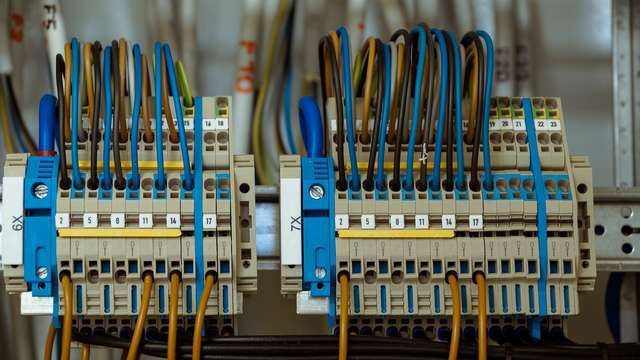
- Each segment should include a junction box for quick diagnostics and replacement of wires.
Modular and, if necessary, multi-axis cable trays and arches should be used - It is important to ensure sufficient space inside the tray containing electric wires, pneumatic hoses and other media lines. Cables and hoses should move relatively freely in the tray, but not to the extent that could lead to injury to employees. A clearance of about 10% should be left between the hoses and snakes.
- Where possible, use specially designed and tested cables for applications requiring a high twisting level. The resistance of the cable to torsion and its shielding should be taken into account. Shielded cables have a higher risk of failure because continuous movements can easily damage the cable cover. Therefore, if possible, use unshielded cables with high flexibility.
And the most important:
Optimal cable routing in automation boils down to the principle "the less, the better".