While the world remains fixated on generative language models crafting text and imagery, a far more potent force is maturing in the shadow of industrial server rooms: Physical AI. According to the latest market forecasts, this sector is poised for an unprecedented explosion - a growth rate measured in the tens of thousands of percent. Yet, this digital metamorphosis of matter comes with a steep price, demanding a new definition of security that the industry is currently forging under the pressure of escalating threats. Are modern factories truly ready for this marriage of silicon and hardened steel?
Table of content
A Hyperspace Leap in Deployment
If anyone believed the pace of AI development had reached a plateau, the reports concerning Physical AI offer a brutal reality check. We are witnessing a phenomenon that analysts describe as a "deployment explosion." According to data from ABI Research, the market for Physical AI systems is projected to grow by a staggering 35,000 percent over the next decade. This is not a statistical anomaly; it is a signal of a total reorientation of global industry.
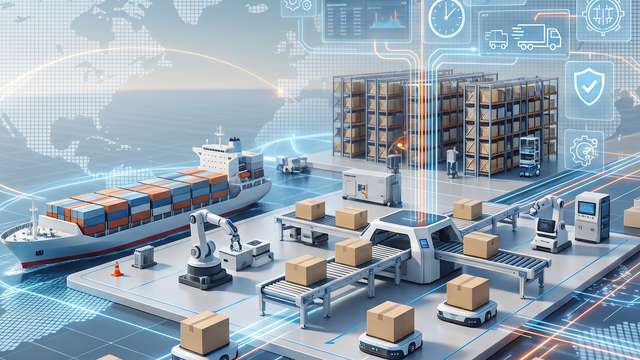
In practical terms, what is Physical AI? It represents the transition of algorithms from the safe confines of the cloud directly onto the factory floors, into warehouses, and across laboratories, where they take control of physical objects. We are talking about Autonomous Mobile Robots (AMRs), advanced robotic arms with haptic feedback, and vision systems capable of making split-second decisions. By 2033, the number of devices controlled by these advanced systems is expected to reach 1.2 million units.
For a seasoned market observer, it is clear that this growth is fueled by three primary engines: the necessity for radical efficiency gains, a chronic shortage of skilled labor, and the drive toward mass-scale personalization. Companies that ignore this trend today will, in five years, resemble 19th-century workshops trying to compete with a Ford assembly line. This is the shift from "AI that talks" to "AI that acts."
Industry Pivots to AI for Defense
As robotization accelerates and factories become saturated with sensors, the attack surface for cybercriminals is expanding geometrically. Every autonomous robot is a potential gateway to the heart of the enterprise. However, as research from Palo Alto Networks indicates, the industrial sector does not intend to wait idly for a verdict. Currently, 39% of manufacturing and industrial firms are already actively utilizing Artificial Intelligence to bolster their cybersecurity.
This strategic shift stems from the brutal mathematics of modern threats. A human, no matter how well-trained, cannot analyze terabytes of industrial network data in real-time. AI can, detecting anomalies invisible to the human eye - such as a millisecond delay in a PLC (Programmable Logic Controller) that might signal a sabotage attempt or a ransomware infection.
Fully 55% of leaders in this sector identify AI as a critical component of their defense strategy over the next two years. Here we see a fascinating paradox: on one hand, there is a fear that AI will be used by hackers to create more sophisticated malware; on the other, there is the realization that only AI can defend us against such attacks. It is a digital arms race where the stakes are not just production continuity, but the physical safety of critical infrastructure.
A New Reality for Production Leaders
Looking at these two convergent trends - the rapid rise of Physical AI and the tightening of the "cordon sanitaire" around IT/OT systems - the image of a modern enterprise emerges: what I call the "AI-First Organization." This is not about chasing gadgets; it is about a fundamental change in business architecture.
The companies that will succeed in the coming decade are those capable of bridging these two worlds. On one side, they will invest in Physical AI systems to automate processes that were previously impossible to codify (such as sorting irregular objects or navigating internal logistics in dynamic environments). On the other, they will integrate these systems with advanced security platforms based on machine learning.
It is worth noting one further aspect rarely mentioned in brief press releases: data. The foundation of the 35,000% growth in Physical AI is the ability to collect and process data at the "edge" of the network (Edge AI). It is there, directly at the machine level, where critical decisions are made. However, the edge is also where the network is most vulnerable. Therefore, modern industry is moving toward a "Zero Trust" architecture, where every sensor, every robot, and every algorithm must constantly verify its identity.
In summary, we stand at the threshold of an era where AI ceases to be merely software on a screen and becomes an integral part of physical factory reality. This represents an opportunity for a quantum leap in productivity, but it is also a challenge that will test the technological maturity of the global industrial sector. Those who master the art of securely deploying Physical AI will write the next chapter of the economy. The rest will remain in the history books as a cautionary tale of digital skepticism.