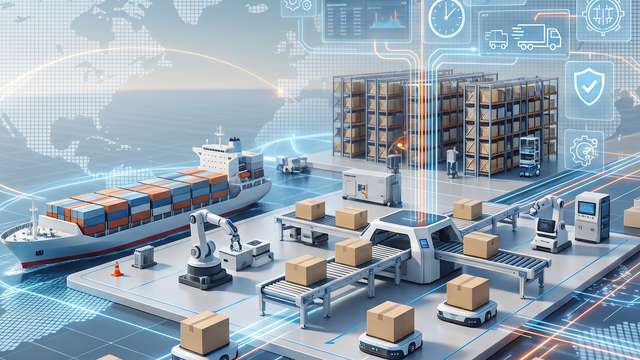
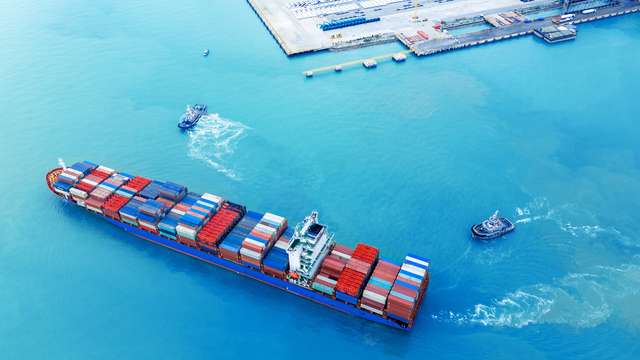
The beginning of 2026 has brought maintenance managers and procurement heads a sharp reminder of how fragile the global system of interconnected vessels truly is. While production halls in Europe are running at full steam, the sound of rhythmic keyboard tapping in logistics offices is fueled by rising tension. The reason? A geopolitical Gordian knot tightening around the world’s most vital trade routes.
Table of content
Rounding Africa: Time is Money
The situation in the Red Sea and the Strait of Hormuz, which escalated at the turn of the year, has moved far beyond news headlines. For a European factory, this means that a container of electronic components from Asia no longer travels for 30 days, but closer to 50. Rerouting ships around the Cape of Good Hope is not just about thousands of extra nautical miles; it is primarily about a drastic surge in fuel costs and insurance premiums.
In industrial automation - where many components, from HMI panel processors to inverter capacitors, originate in the Far East - this lag is felt immediately. "Lead time is now a parameter as critical as current capacity or the number of digital inputs," is a phrase heard increasingly often in trade fair hallways.
Expert Insights
The situation is serious, as confirmed by global logistics specialists. Vincent Clerc, CEO of Maersk, was blunt in his recent analysis of trade route disruptions: - We must be prepared for these disruptions to persist. This is not a problem that solves itself in a week. The transport network is extremely strained, and every ship diversion affects container availability in an entirely different part of the world - he said.
This "network strain" Clerc refers to translates directly into your control cabinets. When components are scarce, prices on the secondary market and through independent distributors begin to rise dynamically.
The "Just-in-Case" Strategy
For years, the industry relied on the Just-in-Time model. January 2026 has finally buried this idea in its orthodox form. Today, the winners are those who have pivoted to Safety Stock and partners who hold physical inventory within Europe.
At Automation Trader, we observe this phenomenon daily. Companies that cannot afford an 8-week line stoppage due to a missing I/O module are increasingly seeking alternative supply channels. Geopolitics is no joke - it represents a real cost of downtime, which in extreme cases can cost a facility tens of thousands of euros for every hour of silence on the floor.