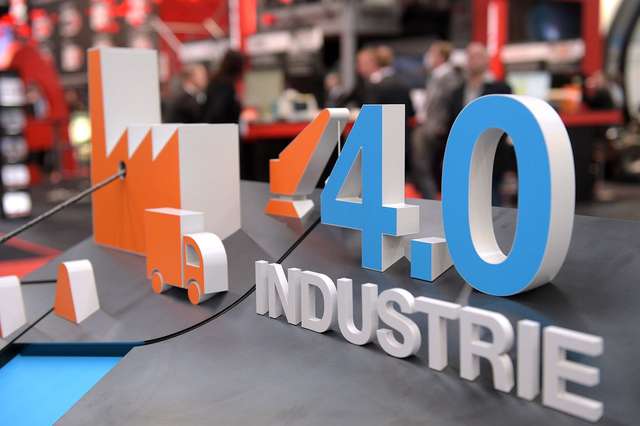
Thousands of texts have already been written about the 4.0 industry. A lot of them also appeared in Automation Trader, and this one will be no different in this case. This time, however, in a slightly narrower sense.
Table of Contents
Many companies are now focusing on more and more innovations. Solutions that are to improve production, reduce costs, and bring very specific benefits for the environment. This last aspect may seem marginal to some, but it would be untrue thinking. Nowadays, an increasing number of customers think very seriously about the issues of care for the environment and ecology, and then decide whether a given company shares their philosophy in this regard when making business choices.
Good solutions
Individual manufacturers do their best to implement good solutions into their production processes, and Mitsubishi Electric is no exception in this respect. In the case of this giant, whose activities are aimed at the global market today, a proprietary solution was chosen, which we know better as e-F@ctory.
There is nothing to cheat, even before the outbreak of the coronavirus pandemic, the emphasis on competitiveness and cost reduction was very strong. Problems related to subsequent closure of borders and disruption of supply chains have provided fuel for accelerating these changes and now the business model of each company must assume such an increase in expenditure on digitization and integration processes so as not to be left behind by the competition. In the case of Mitsubishi Electric, this is out of the question, because it is the Japanese giant that sets the rhythm of market events.
 Play video
Today, modern factories no longer resemble their predecessors. For when it comes to controlling many - often complicated - processes, nothing can be left to chance, and the decision-making person should receive the necessary information package as soon as possible. This is where the solutions from the industrial revolution 4.0 come into play, which must quickly process entire data catalogs. This, in turn, can only be done by combining the latest technological solutions with the so-called the concept of "internet of things". It assumes, in turn, that traceable items can directly or indirectly collect, and process and exchange data via an intelligent computer network.
Functional platform
The e-F@cator solution from Mitsubishi Electric will provide this kind of integration. Its implementation allows not only to control all possible production processes, but also provides the operator with a data package and allows him to monitor each measurable variable. All this, in turn, takes place on a single functional platform.
The whole process of collecting data is also related to the fact that in the solutions proposed by Mitsubishi Electric you can most often find frequency converters, as well as servo drives, and not, for example, stepper drives. This means that data such as encoder positions, energy consumption, torques or load inertia can be easily collected. Converters also have another advantage, they are more profitable in financial terms and bring benefits in terms of managing speed operations, which can ultimately bring measurable savings.
Factories of the future
If we add to all of this the complexity of the production process in terms of robotization, which is after all one of the integral parts of Industry 4.0, then we have a full picture of the situation. And since we are talking about the factories of the future (for some it is the present), all these robots must properly cooperate with people. Here, more and more often, sensory-controlled robots are in the lead, as they have no problems with adapting to specific conditions without having to interfere with their software. All this flexibility brings tangible benefits at the end of all accounts.
e-F@ctor offers all these solutions in one place and makes that at a time when competitive advantage becomes a real currency and a difference, Mitsubishi Electric offers solutions that meet all expectations.