How much space in the pages of Automation Trader has already been devoted to the subject of Industry 4.0. Our guests have talked about their experiences, but it seems that within this concept there are things that at first glance can be considered industrial science-fiction.
Table of Contets
Sebastian Lemieszek from Siemens gave a very interesting talk about industrial revolutions in our studio, who placed Polish manufacturing realities somewhere between Industry 3.0 and Industry 4.0. "I think we are somewhere in between and this hurra-optimism about the next revolution is still premature," he said.
Revolution or evolution?
To get a better idea of what exactly we are talking about, let's recall that the 3.0 Revolution is referred to as the so-called digital revolution. It brought the fairly widespread use of computer technology and automation. When it began, personal computers, the Internet, and the automation of many production processes began to appear on a large scale.
As for Industry 4.0, this is where data analysis comes into play. We're also talking about the integration of robotic systems, the Internet of Things (IoT) or the large-scale use of autonomous robots, 3D printing, and augmented reality to create more flexible and efficient manufacturing systems.
- It is colloquially said that "data is the new gold." After all, if we have already moved on from phase 3.0 and automated production, we should have massive amounts of process data. And in phase 4.0, we are already focusing on the utilization of this data for a tangible benefit - Sebastian Lemieszek continued.
Is this even possible?
All of this is heading towards production lines actually becoming those lines that work almost self-sufficiently. This, in turn, leads to an extremely interesting solution, which is already being talked about today, and which may soon become a standard.
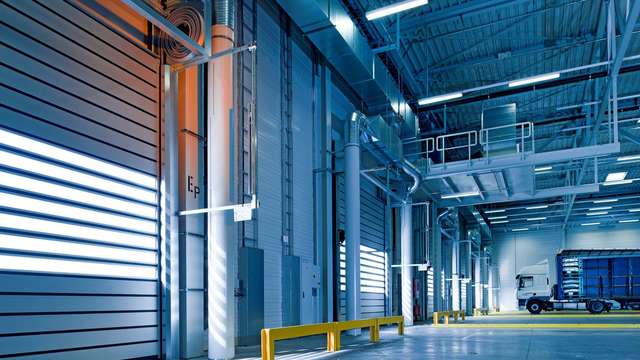
This notion is something recently reported by "pwc.com". It is about Dark Factory, or in free translation Dark Factories. Fully automated factories that can bring a lot of savings on almost every possible level.
First of all, factories of this type don't need to be located close to residential centers at all. Since you don't need people (or as many people) to run them, there's also no need for those people to have easy access to the workplace.
Secondly, a smaller or completely limited number of employees means less costs, and not just direct costs. We also save on utilities, heating or just lighting.
The third argument is less danger to people, especially where the work is particularly dangerous. Indirectly, this in turn leads to further savings, resulting precisely from the need to equip people with safety equipment and, before that, to train them in health and safety and the operation of particular machines.
And finally, fourth, it eliminates human error from the entire production puzzle, which could negatively affect the quality of the process.
There is nothing for free
Of course, to be able to enjoy in innovation and savings, you first need to invest, and not a small amount of money. The whole thing must, of course, be profitable, and this means that the idea of Dark Factories will not work everywhere and for every production.
Here, in turn, we return to the aforementioned data analysis, which is essential for preparing a plan of action. So are we ready for the next technological breakthrough?