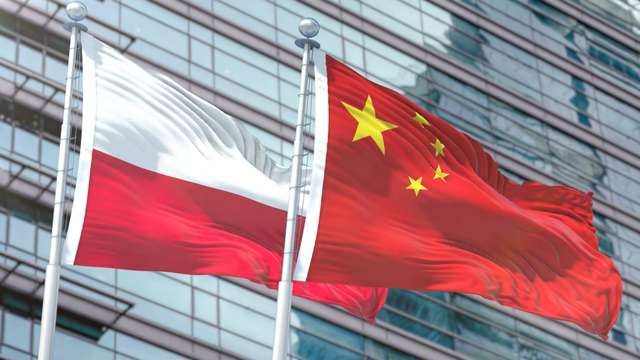
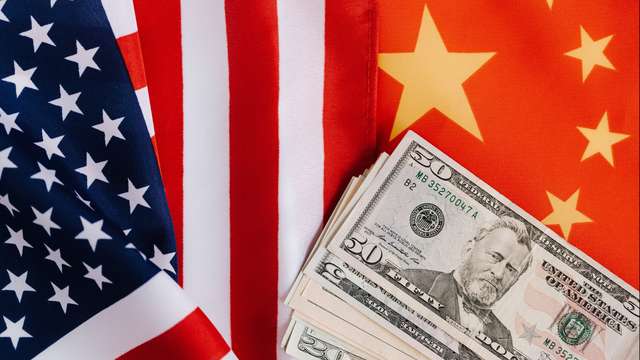
The United States is in an increasingly bad position when it comes to a major technological clash with its greatest enemy and rival, China.
Table of contents
A measure of power
The central axis of the rivalry between the US and China today runs along the semiconductor line. We are talking about one of the most important, if not the key area of the modern economy and an indispensable component of many branches of modern technology - from the washing machines or other household appliances found in every home, to the war industry and missile guidance systems.
Therefore - and this is no secret knowledge - access to reliable and affordable semiconductors has an impact on a country's economic, but also military power. The best example of this, in turn, is China. Their explosive growth over the past 20 years is mainly due to a high concentration of global electronics production. Chinese companies such as Huawei and ZTE are today at the forefront of quantum technologies, artificial intelligence and 5G technology.
The empire is counterattacking
In recent years, the United States has sought to limit China's access to semiconductor technology. Traditionally, Washington has restricted exports of cutting-edge chips that could have military applications, believing that the United States can act faster and more efficiently than China, precisely because of innovation and free trade.
However, everything changed after China announced its "Made in China" strategy in 2015. It was then that concerns began to emerge that China's military and economic power was growing faster than expected, with US commercial technology being used to do just that.
Not surprisingly, then, the United States moved into action and, in order to maintain its advantage in the semiconductor field, decided to significantly restrict sales of advanced semiconductor technology to Chinese companies - regardless of their activities, whether purely commercial and civilian or military. On top of all this was the support of the domestic semiconductor industry through the $280 billion CHIPS and Science Act.
Who will win this clash?
Can such a Washington policy bring long-term benefits? "The Economist" thinks it is unlikely. After all, the U.S. is doing exactly the same thing as in other cases a superpower has appeared on the horizon attempting to threaten its leadership position.
Containment and prevention this time may be problematic. After all, the position of U.S. companies in the global semiconductor chain is not that strong, and the actions taken - the aftermath of pandemics, wars and tensions between Washington and Beijing - are overdue. So the conclusion is obvious: the US has started a war it will not be able to win.
An ace up its sleeve?
Washington, however, is taking the subject very seriously, which in turn has translated into a limit on the maximum processing speed of chips that can be sold in China, as well as a limit on the data transfer speed of those chips. This, in turn, is a key factor in teaching large artificial intelligence models, an extremely tedious activity that requires connecting a large number of chips together.
- "It looks like the US government does not want to definitively shut down China's efforts in the field of artificial intelligence, but to limit them somewhat," said Patrick Moorhead, quoted by the Financial Times.
Interestingly, according to Chinese engineers, only Nvidia chips can provide the efficiency needed to teach AI models. The performance of a single 800-series chip, despite weakened transfer speeds, is still better than other solutions available on the market.
So the Americans are playing with strong cards, and if they wanted to, they could hit the Chinese even harder. However, their stalling in this field is not their goal in itself. After all, the long-term plan is to expand their advantage while "grilling" Beijing and keeping aces up their sleeves, which in this showdown of giants will certainly have their importance.