
The year 2025 brings not only new technologies to the automotive industry, but also new threats. We checked what market leaders fear most today – and what actions they are taking to meet the challenges of the future.
Spis treści
- 1. The spectre of sales stagnation in an era of consumer change
- 2. Chaos surrounding the electromobility transformation
- 3. Regulatory pressure and rising compliance costs
- 4. The ‘silent invasion’ of new players from Asia
- 5. Lack of specialists and ageing workforce
- 6. Cybersecurity threats and remote attacks
- 7. Unpredictability of supply chains
- Is your company ready for these challenges?
1. The spectre of sales stagnation in an era of consumer change
Changes in consumer attitudes pose a real threat of sales stagnation. In Europe, interest in combustion engine cars is declining, and electric models – despite their growing availability – are not convincing everyone.
New generations entering the market prefer usage (e.g. subscription or car sharing) over ownership, which obviously forces a redefinition of traditional business models.
2. Chaos surrounding the electromobility transformation
The lack of uniform regulations and uneven charging infrastructure make the transition to electromobility fraught with uncertainty.
Manufacturers do not know which battery technology to invest in, and consumers do not know whether the infrastructure will be ready for their needs. The predicted risk of technological investments reaching a dead end is therefore quite real.
3. Regulatory pressure and rising compliance costs
Euro 7 standards, the Green Deal, mandatory ADAS systems – the list of requirements for manufacturers is constantly growing. Maintaining compliance with regulations is becoming increasingly expensive and complex, and pressure from regulators is affecting manufacturers' R&D schedules and margins.
4. The ‘silent invasion’ of new players from Asia
Chinese EV brands (such as BYD, NIO, MG) are increasingly boldly entering the European market. Thanks to aggressive pricing policies, flexible supply chains and fast time-to-market, they are able to carve out larger and larger slices of the market pie at an ever-increasing pace.
European OEMs are losing their technological advantage and fear losing their position in their home market.
5. Lack of specialists and ageing workforce
Digital transformation and electrification require new skills – from AI engineers and software designers to cybersecurity experts.
Meanwhile, many companies are struggling with talent drain and skills mismatches, which threaten to cause delays and implementation errors.
6. Cybersecurity threats and remote attacks
A modern car is a computer on wheels. With every OTA update and integration with the internet, the risk of hacker attacks increases.
Companies fear scenarios in which taking control of a vehicle or fleet could threaten lives, reputations and financial stability.
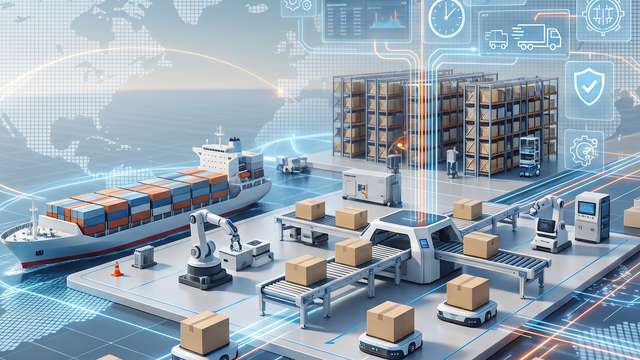
7. Unpredictability of supply chains
The pandemic, the war in Ukraine, tensions with China – these are just some of the factors that continue to affect the stability of supplies.
Car manufacturers and component suppliers continue to face shortages, especially of semiconductors and batteries. Supply chains need to be rebuilt with resilience in mind, not just cost efficiency.
READ MORE: IS THE CAR INDUSTRY FACING A NEW ERA - CLICK!
Is your company ready for these challenges?
Design the future instead of reacting to it. We support companies in the automotive sector in their technological, strategic and operational transformation.
Contact us to find out how we can help your brand stay ahead in times of uncertainty.