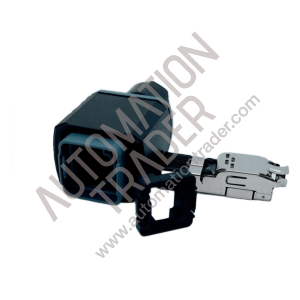
The Siemens 6FX1121-4BB01 is a ruggedized servo add-on module designed for integration within Siemens SIMODRIVE and SINUMERIK-based CNC drive systems. As a critical interface component between the servo drive unit and the machine axis control loop, this module supports high-precision motion control in demanding industrial environments including metal cutting, heavy machining, and automated production lines.
Sourced as an original spare part, the 6FX1121-4BB01 is pre-shipment tested and backed by a 12-month warranty, making it a reliable choice for maintenance engineers managing legacy CNC infrastructure and planned downtime reduction programs.
When a servo axis fault, encoder feedback error, or drive communication alarm triggers an unplanned shutdown, the 6FX1121-4BB01 is frequently identified as the root-cause component. Its role in signal conditioning, encoder interface adaptation, and axis-level feedback processing means that degradation or failure directly impacts positioning accuracy, spindle synchronization, and overall machine availability.
Stocking this module as part of a structured spare parts program is a proven strategy for reducing mean time to repair (MTTR) and protecting production throughput. Replacing the 6FX1121-4BB01 in a SIMODRIVE or SINUMERIK-controlled machine is rarely an isolated task.
Maintenance engineers and spare parts procurement teams should treat this module replacement as a trigger for a broader cabinet inspection to prevent secondary failures and ensure the restored axis performs within specification.
During the same maintenance window, it is advisable to inspect the SIMODRIVE 611 power module supplying the affected axis — voltage ripple or DC bus instability can accelerate add-on module wear. The encoder cable assembly (typically a 6FX series pre-assembled cable) connecting the motor encoder to this add-on module should be checked for insulation damage, connector corrosion, and shield continuity, as cable faults are a common cause of repeat module failures.
The SINUMERIK NCU (Numerical Control Unit) should be verified for active alarms related to axis feedback, and its firmware version confirmed compatible with the replacement module. The SIMODRIVE 611 control module on the same drive stack should be inspected for capacitor aging and fan operation, particularly in systems with more than eight years of continuous service.
If the machine uses a PROFIBUS DP communication module for axis coordination, verify the bus termination resistors and cable shielding integrity — a degraded bus can cause intermittent axis faults that mimic servo add-on module failures.
The 24 VDC auxiliary power supply feeding the control electronics should be load-tested; an under-voltage condition during axis enable sequences is a known cause of spurious drive faults. For machines with multiple controlled axes, the axis expansion module or I/O expansion board in the same cabinet should be checked for loose terminal connections and contamination.
The SINUMERIK operator panel (OP/HMI unit) alarm log should be reviewed for historical fault patterns that may indicate systemic issues beyond the immediate module failure. Where signal isolation is required between the CNC controller and external safety circuits, the signal isolator or relay output module in the same I/O rack should be tested for correct switching thresholds.
Finally, the cabinet cooling system — including filter mats, heat exchangers, and internal fans — should be serviced to ensure the replacement module operates within its rated thermal envelope.