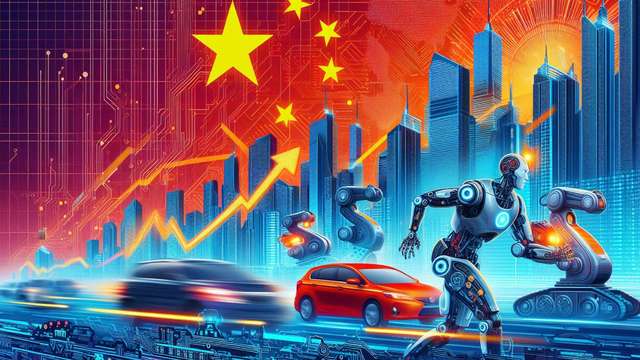
China, the undisputed leader in industrial production, has no intention of slowing down. This is best evidenced by the new economic strategy they are currently implementing beyond the Great Wall, which is to be based on automation, as well as the massive integration of robots in industrial sectors.
Table of content
The country, which has risen to the position of ‘factory of the world’ over the past decades, is now focusing all its energy on extensive modernisation - precisely through robotisation. Currently, this is the only way to not only maintain its leadership position in the global economy, but also - and perhaps above all - to increase its lead over the rest of the stakes.
The Chinese revolution
Robotics in China is developing at a rapid pace, responding to the challenges posed by accelerating labour costs as well as an ageing population. Automation, supported by advanced robots, is a key part of Beijing's economic strategy to increase efficiency, quality of production and international competitiveness.
In 2023, China has invested billions of dollars in the development of robotic technology and artificial intelligence, which is part of the country's larger technological transformation plan. Robots are being used not only in traditional industrial sectors such as automotive and electronics, but also in more advanced fields such as semiconductor manufacturing, biotechnology and renewable energy.
Automation is therefore also making its way into the healthcare industry, responding to the needs of an ageing population and increasing demands for medical care.
The foundation for economic growth
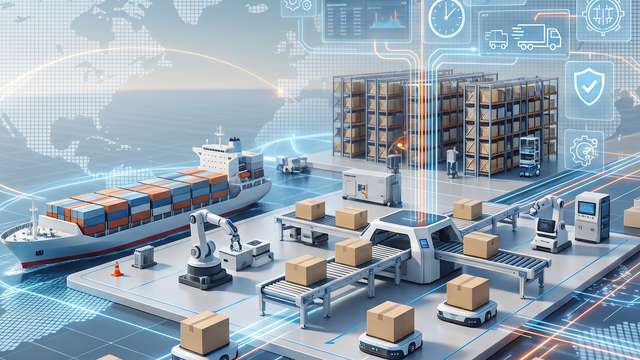
China is betting on the development not only of robotic technologies, but also of the infrastructure to support their implementation. Factories of the future, integrated with digital production management systems and artificial intelligence, are becoming the new norm. Thanks to extensive 5G networking and technologies such as the Internet of Things (IoT), Chinese factories can operate in near-autonomous mode, monitoring, optimising and managing production processes in real time.
One example is the ZeroTouch system, which enables precise quality control using a non-contact measurement method, eliminating the need for manual intervention. With such solutions, production becomes not only more efficient but also less prone to error, which is crucial for high-tech industries such as the production of electric cars or electronic components.
It is worth noting that China, in its drive towards automation, is focusing not only on increasing productivity, but also on reducing its carbon footprint. Automated production uses less energy and processes are optimised to minimise waste and emissions, which fits in with China's long-term carbon neutrality goals.
The future of robotisation
China is expected not only to continue developing its internal technological resources, but also to become an exporter of advanced automation systems on a global scale. Already, Chinese companies such as DJI in the drone industry and BYD in the automotive sector are competing internationally with innovative solutions at affordable prices.
Increased automation also has an impact on the labour market. While some traditional jobs will be replaced by robots, there will be new opportunities in areas related to programming, maintenance and design of automated systems. China, recognising this challenge, is already investing in education and retraining its workforce to meet new labour market demands.
As a result, China could become an example for other countries facing the challenges of rising labour costs and the need for industrial modernisation. The key, however, will be how effectively the state is able to balance the implementation of technology with minimising negative social impacts such as unemployment and economic inequality.
The robotic future of manufacturing - a buzzword that will increasingly be associated with China as the country continues its drive to become a pioneer of innovation in the area of industrial automation.