
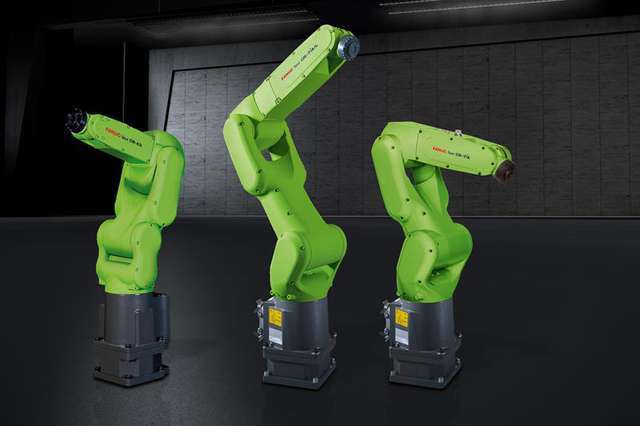
Until recently, conventional industrial robots and humans tended to keep a safe distance in a factory environment. The robots were isolated in special cells or behind security fences. However, the advent of the collaborative robot is redefining human-robot relationships. No longer surrounded by fences, this new breed of robots is safe and intelligent enough to work with or alongside humans in a variety of production environments.
Table of Contents
Unconventional robots
Unlike conventional industrial robots, collaborative robots are equipped with advanced sensor technology that allows them to interact safely with humans. In addition to monitoring the robot's position and speed, these sensors stop and safely reverse the robot in the event of human contact. Additional safety features prevent the robot from trapping body parts such as fingers, and allow a human to simply push the robot backwards if it gets too close. The robots also have no sharp edges and some models use soft covers. All FANUC collaborative robots are certified according to ISO safety standards.
Human-robot collaboration can benefit your business in many ways. One of them is better working conditions for people. Thanks to collaborative robots in a team, people no longer have to perform physically demanding tasks and can focus on more rewarding work. As a result, people stay healthy longer, reducing the injuries associated with manual labor. Human-robot collaboration also helps to some extent to alleviate the problems of an aging population in industrial societies.
Wide range of applications
Collaborative robots are ideal for a wide range of industrial applications. Wherever they are used, their strength, precision and repeatability perfectly complement human skills. On machining and assembly lines, they prevent people from lifting and positioning heavy components. They are also ideal for machine maintenance applications that often require the presence of an operator. In addition, since they do not need safety fences, they can be easily moved between machine tools.
By eliminating the need for an additional workstation, collaborative robots also provide an efficient way to perform hassle-free quality checks throughout the entire service process. They are also great for boring, repetitive, dirty and dangerous tasks related to handling on packaging and palletizing lines.
Source: Fanuc