
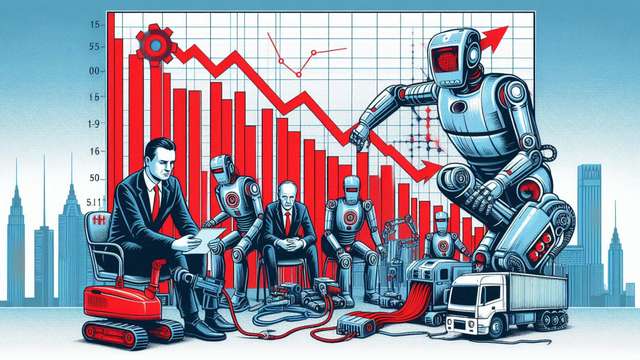
What about this robotization in Poland? According to the latest report from the International Federation of Robotics (IFR). In industrial terms, it is gaining ground, although the rate of growth is not as high as we would like.
Table of content
According to the aforementioned report, there will be 2,685 industrial robots installed in Poland in 2023, down 15 percent from the previous year. Despite this, Poland's robotization density rate, which stands at 62 robots per 10,000 employees, is still well below the global average of 141 units.
Which sectors dominate?
The highest investment in robotization was in the automotive sector, where demand increased by 24 percent to 775 units. The electrical and electronics sector, on the other hand, installed 344 robots, up 29 percent and underscoring the importance of automation in high-tech manufacturing. In other industries, such as metallurgy, demand declined, although historical data suggests that long-term growth will continue.

Causes and challenges
The main challenges of the Polish market are the high cyclicality of robot demand and the relatively low adoption of robotization in some sectors. The key drivers of investment are rising labor costs and pressure for efficiency. Forecasts for the next few years indicate a rebound in trends, supported by, among other things, EU funds and demand for automation due to labor shortages in industry.
Poland and the world
How does the situation in Poland compare to what global trends are offering us? In this respect, the undisputed leader is still China, which accounts for almost half of all new robot installations.
Asia is ahead of Europe and America in terms of both the number of installations and the rate of growth. More than 590,000 industrial robots were installed globally in 2023, up 7 percent from 2022. In Europe, the number of new installations grew at a moderate rate of 3 percent per year, putting Poland in line with other countries in the region, albeit with some lag in technology adoption.

Technologies of the future
IFR's report also highlights the growing importance of collaborative robots (cobots), which have reached a market share of 10 percent. Technologies such as cloud computing, 5G networks and machine vision are accelerating the development of robotics, and the application of artificial intelligence could soon revolutionize the way robots are programmed and maintained.
The final conclusions of the report can therefore be summed up in the statement that industrial robotization in Poland, although still in the development stage, has huge growth potential. The development of technology, pressure to increase efficiency and EU support create opportunities for the country to accelerate on the road to industrial automation in the coming years.