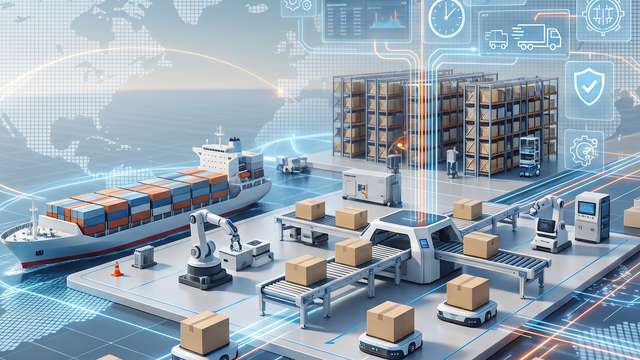
For years, resilience in supply chains was often equated with full warehouses. Companies built up inventories "just in case", believing that stockpiles were the best safeguard against disruptions. Yet the past few years - marked by a pandemic, geopolitical turbulence and logistical bottlenecks - revealed a simple truth: you can’t warehouse the entire world. What you can do is design smart alternatives. And that’s why emergency sourcing has become more important today than owning even the most impressive warehouse.
Table of content
Warehouses are no longer enough: volatility demands flexibility
Modern supply chains are global, and therefore globally exposed. Transport interruptions, sudden material shortages or regional shutdowns can halt production within hours. The traditional answer - "build a bigger warehouse" - is losing its logic. Inventory is expensive, slow and often fails to keep pace with market volatility. What businesses need today is not walls of pallets, but the ability to pivot.
Emergency sourcing means having alternative suppliers already vetted and on standby, along with certified substitute materials and clear procedures for switching sources. This is not improvisation under pressure, but a carefully engineered safety net. In practice, it requires constant market monitoring, supplier audits, risk assessment and building relationships with partners who can step in at a moment’s notice.
Emergency sourcing as the new axis of business resilience
The key difference between inventory and emergency sourcing is response time. A warehouse helps a company survive a crisis. Emergency sourcing helps it move beyond the crisis. Organizations with flexible alternatives can maintain production, minimize downtime and adapt to shifting realities. Instead of clinging to Plan A, they can switch smoothly to Plan B, C or D.
This does not mean warehouses no longer matter. They remain important for stabilizing production. But their role has changed: inventory can no longer be the sole risk-management strategy. Relying only on stock is like keeping all savings in one vault and pretending the world is stable. Today, the winners are the companies that think in terms of "what if" long before something actually goes wrong.
Digital tools amplify this shift. Risk-monitoring systems, predictive analytics and supplier-collaboration platforms dramatically shorten reaction times and help manage complexity at a scale humans cannot. A warehouse can be counted in units. Risk must be measured in probabilities.
Paradoxically, the more unpredictable the world becomes, the more valuable preparation - not accumulation - becomes. Emergency sourcing is an investment in resilience, agility and competitiveness. In an era of chronic disruptions, success belongs not to the company with the biggest warehouse, but to the one that can find another door the moment the main one suddenly closes.