The closer to the end of 2021, the more forecasts appeared that the crisis on the microchip market should slowly come to an end. As it turned out, however, the improvement of the situation on this particular market may not be as easy as it was speculated.
Table of Contents
To better understand what exactly is being said, it is worth going back a few months and moving to distant China, which is responsible for 85 percent of the world's magnesium production. It just so happens that by the end of last year, due to the huge energy crisis, it was decided to close 35 out of 50 magnesium smelters behind the Great Wall, and at the same time panic the markets.
Panic in the markets
No wonder, because magnesium is one of the key ingredients used in the production of semiconductors, and the Chinese decision led to a gigantic increase in prices in a very short time. Today you have to pay around 14,000 dollars for a ton of magnesium, which hurt the automotive industry particularly hard.
As if all this was not enough, the Chinese had to limit production not only in magnesium smelters, but also in factories that produce chips. Due to their huge shortage, Beijing decided to saturate its own market in the first place.
This is nothing new, as Beijing has proved several times this year that if there is a problem, it looks towards its own interests. When the energy crisis came and it was necessary to make cuts, foreign producers with plants in China were most at risk. Due to the shortages, all the power was directed to the domestic plants, while the rest had to accept much higher prices. In this case, it did not matter if someone was a giant like Apple or a slightly smaller player.
Sunken dreams
Despite all these events, experts from HSBC were quite optimistic about 2022, forecasting the discharge of the crisis after the Chinese New Year , which falls on February 12-19. It is already known, however, that it will be extremely difficult.
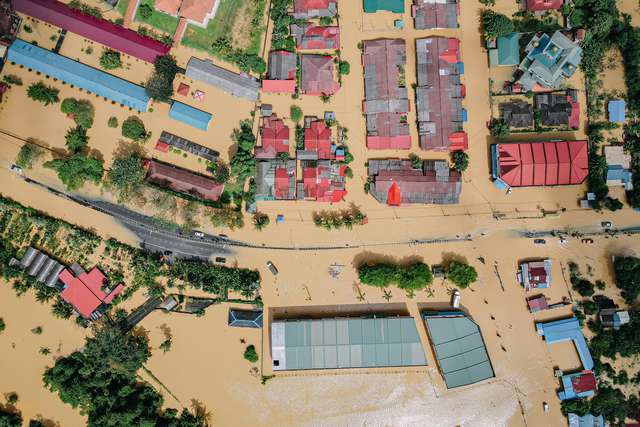
This is because all forecasts go to the head if unpredictable factors enter the game, such as natural disasters. In this particular case, it is about the catastrophic floods that have recently hit Malaysia which have caused severe damage to semiconductor factories. The Dutch concern BE Semiconductor, whose plant in Shah Alam was flooded and destroyed, suffered the greatest losses by far. The factory has, of course, been closed, and its re-adaptation to production is expected to cost up to 7 million dollars, according to „DigiTimes Asia” estimates. That's a lot, especially as the closing loss alone is already valued at around 28 million dollars today.
As the market is a network of very close connections, the problem of some immediately translates into problems of others. Pananasonic has already suspended its production in Malaysia, and the floods will also translate into the results of companies such as LG Innotek, Foxconn Technology Group, STMicroelectronics, Advanced Semiconductor Engineering, Forehope and Micron.
Late decisions
Is that all? Nothing could be more wrong. As Reuters sources show, it is also worth informing that the flood also hit the supply chains that were already heavily strained . All because of the serious damage that took place in one of the largest commercial ports in Southeast Asia - Selangor.
What will all this mean? Unfortunately, but a deepening crisis. The demand for parts is huge, while semiconductors are simply not enough to meet this demand. This, in turn, will affect not only the aforementioned automotive sector, but there is no doubt that the losses will be by far the largest. Vehicles packed with electronics are difficult to tighten today with the necessary touch panels, heated seats or other benefits that have become a standard in recent years.
Today there is a lot of talk about the punishment for Western countries for shifting almost all of their production to China. Many of them intend to change this and move factories of such sensitive components as chips to each other. The problem is that it will not be easy, because building appropriate plants from scratch and starting regular production in them is a matter of several years.