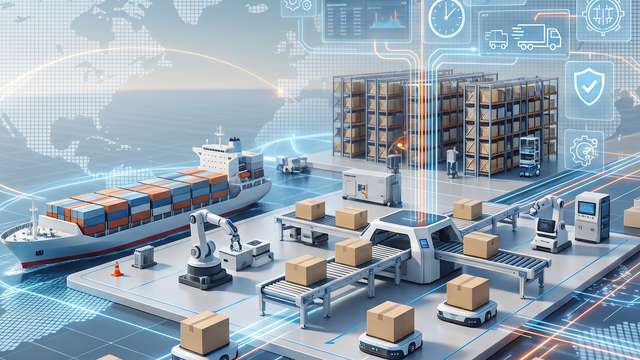
Faced with ongoing disruptions such as climate change, geopolitical tensions or labour strikes, global supply chains are facing the need to adapt to new realities. This is met in turn by artificial intelligence, which could become a key tool in building the resilience and efficiency of these structures.
Table of content
Responding to today's logistical challenges
In recent years, global supply chains have experienced numerous disruptions that have revealed their vulnerability to a variety of crises. The COVID-19 pandemic, geopolitical conflicts or natural disasters are just some of the destabilising factors. In response to these challenges, logistics industry leaders are turning to advanced technologies, including AI, to increase the resilience and flexibility of their operations.
Artificial intelligence, in turn, enables the analysis of huge datasets in real time, enabling faster and more accurate decision-making. This enables companies to anticipate potential disruptions and proactively respond to them, minimising the risk of supply disruptions.
For example, AI can analyse weather data, information about potential strikes or, ultimately, political tensions to predict and bypass potential supply chain problems.
Transforming supply chains
Integrating AI into supply chain management processes brings a number of benefits:
Route optimisation and inventory management: AI algorithms can determine the most efficient delivery routes, reducing transport costs and time. In addition, accurate demand forecasting allows optimal stock levels to be maintained, minimising the risk of excess or shortage of goods.
Process automation: AI automates routine tasks such as order processing and stock monitoring, increasing operational efficiency and reducing human error.
Risk management: Real-time data analysis allows potential risks to be detected early and corrective action to be taken quickly, making the supply chain more resilient to unforeseen events.
The future of supply chains with AI
As technology advances, the role of AI in supply chain management will grow. Companies that choose to implement these technologies will gain a competitive advantage through greater flexibility, efficiency and the ability to respond quickly to changing market conditions.
However, in order to fully exploit the potential of AI, it is necessary for organisations to be properly prepared, including investment in technology infrastructure and training for employees. Only then will it be possible to achieve the full benefits of integrating AI into logistics processes.
So we can see here the huge potential to revolutionise global supply chains, making them more resilient to future crises. Looking more broadly, in turn, this is yet another sector and another area of our lives that needs to actively implement AI. As we have highlighted many times before in the pages of Automation Trader - down this road