We are entering a new era in the history of industrial automation - an era that will be defined by a combination of advanced digital technologies as well as the creativity of the human mind.
Table of contents
Yes, this is the shift from under 5.0, an evolutionary step in industry that envisages more human involvement in manufacturing processes than ever before.
Nothing to fear
The notion of Industry 5.0 is gaining increasing recognition among industry leaders, who recognise the need to revise the previous approach to the automation process. Unlike the previous revolution - the one numbered 4.0 - where automation and digitisation dominated, Industry 5.0 places more emphasis on collaboration between humans and machines.
The main goal of Industry 5.0 is to create a harmonious environment where humans and robots can work together using their unique skills. This industrial paradigm implies that workers will not be replaced by machines, but will work alongside them, complementing each other. This means that we will place a much stronger emphasis on the humanisation of industry.
Man and machine
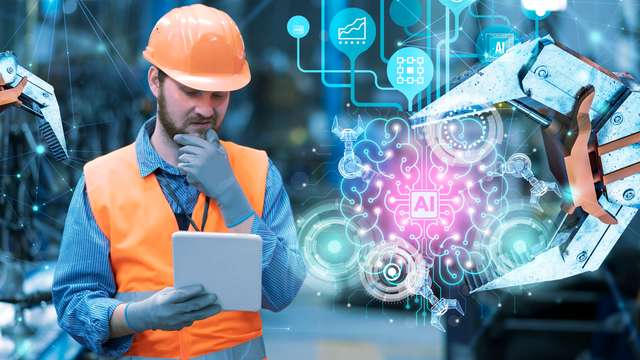
The increased importance of the human factor is primarily due to the opportunities offered by modern technology. Advanced robotics, artificial intelligence and the Internet of Things (IoT) make it possible to integrate man and machine in a highly effective way. This allows employees to use their creativity and intuition to solve complex problems, while robots take care of routine tasks.
One of the main developments of Industry 5.0 is also the development of technologies that support the interaction between humans and machines. Although automation has long been present in industry, further innovations in the areas of collaborative robotics (cobots), vision systems and human-machine interfaces (HMIs) are revolutionising the way people work alongside machines.
In addition to the technological aspects, Industry 5.0 also challenges organisations in terms of work culture and management. Companies need to change their approach to human resource management, placing more emphasis on developing soft skills such as communication, collaboration or creativity. In addition, organisational structures will need to be adapted to the new human-machine collaboration model.
All hands on deck
However, the aforementioned changes are not possible without the involvement of key stakeholders. Implementing Industry 5.0 requires cooperation between different actors, including machine manufacturers, technology suppliers, researchers and industrial workers. Only by working together and sharing knowledge will we be able to realise the full potential of this industrial revolution.
For industry leaders, this is not only a challenge, but also an opportunity to remodel industry for the better.