
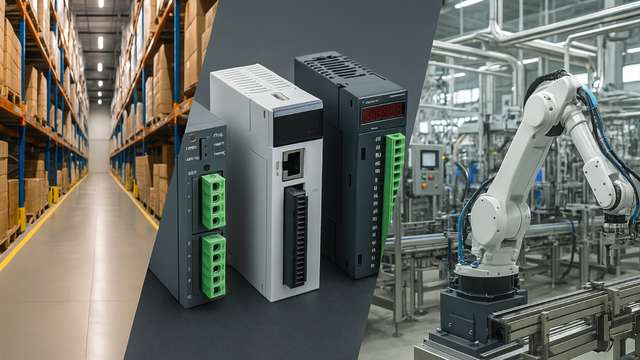
In many organizations, the end of the fiscal year is associated with the pressure to spend remaining budget funds "so they don’t disappear." However, in the industrial automation sector, this approach is becoming increasingly uncommon. Manufacturing companies and system integrators are shifting toward treating their year-end budget not as an accounting obligation, but as a strategic tool - an opportunity to secure production continuity, reduce downtime risks, and strengthen their technological advantage.
Table of content
End of budget as a tool to strengthen production continuity
Industrial automation is exceptionally sensitive to unexpected failures. A single damaged controller, communication module, or inverter can halt an entire production line. Because of this, companies choose to allocate their remaining budget to investments that truly enhance plant resilience - such as purchasing critical spare parts, modernizing control systems, or expanding the inventory of essential components. This approach is far more thoughtful than spending money at the last moment simply to “use up” the budget.
Another reason for this strategic mindset is the situation on the global supply chain. In recent years, the automation industry has faced long lead times, unpredictable product availability, and sudden price fluctuations. Companies that previously invested their year - end funds in key components gained a significant buffer against these disruptions. Today, many organizations view the year - end period as a chance to secure hardware before the market becomes unstable again.
The expertise of solution providers also plays a crucial role. Poorly selected or unreliable spare parts can cause more harm than good. That’s why companies taking a strategic approach rely on suppliers who can offer guidance, match components to existing systems, and guarantee fast delivery. Trusted partners with extensive industry knowledge - such as Automation Trader, a company with long-standing experience in supporting industrial maintenance and modernization - help ensure that budget spending is both efficient and low-risk.
Why is choosing an experienced partner crucial?
Year-end budget planning is also closely tied to upcoming investment projects. Upgrades of control systems or migrations from outdated platforms often require long preparation cycles. The end of the year becomes an ideal moment to finance key elements needed for projects scheduled for the following quarters - whether PLC modules, communication interfaces, or specialized industrial components. This helps avoid last-minute pressure and allows production teams to plan modernization work during optimal windows.
Ultimately, a strategic approach to the year-end budget is simply more cost-effective. Companies that plan ahead avoid emergency purchases where time constraints force them into more expensive or suboptimal choices. In the world of industrial automation - where every minute of downtime translates into measurable financial loss - this proactive mindset often pays off many times over.
In summary, modern industrial companies treat the year-end budget not as a formality, but as a tool for strengthening operational stability. They invest in spare parts availability, modernization, and the long-term resilience of their systems, with experienced partners playing a key role. Choosing well-established providers like Automation Trader ensures that every dollar spent at the end of the year contributes to real production security and development, rather than simply “closing the books.”