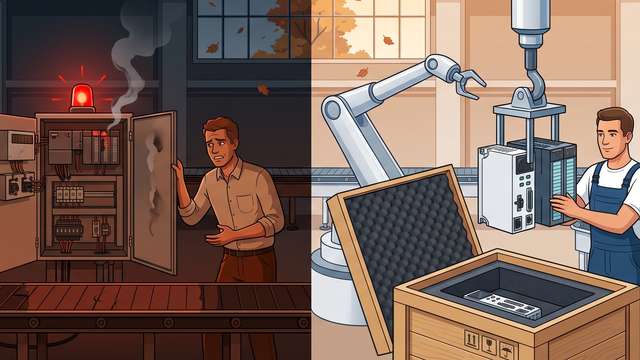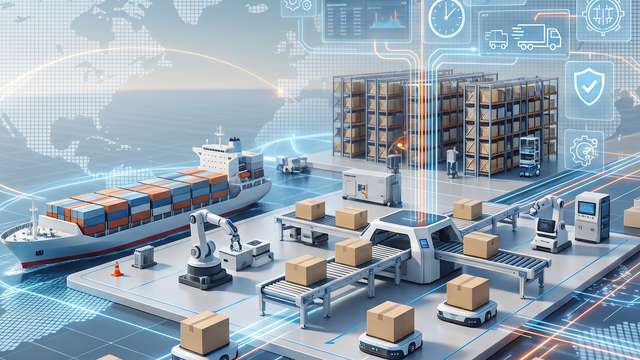
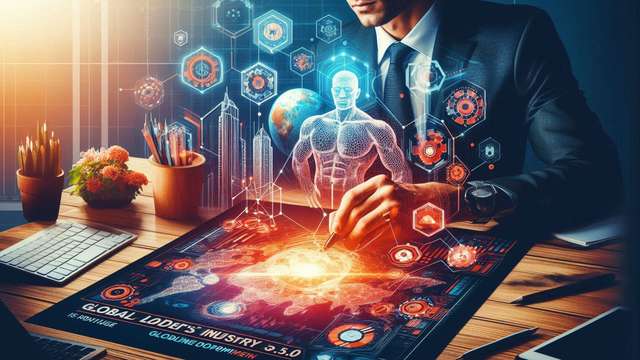
In global technology discourse, the term Industry 5.0 is gaining traction as the next phase of the industrial revolution—one that goes beyond the automation and digitalisation that define Industry 4.0. While countries like Germany, the United States, and China are actively pursuing projects aligned with this emerging concept, for many economies—including Poland—it remains a vision of the future. But what exactly is Industry 5.0? What opportunities and risks does it present? And where does Poland stand in this transformative landscape?
Table of content
A New Era: Human-Machine Collaboration
Industry 5.0 is a response to the limitations of the Fourth Industrial Revolution, which has largely focused on automating processes and integrating machines with IT systems. The new paradigm seeks to bring humans back to the centre of production—not as overseers, but as collaborators working alongside advanced technologies. This includes innovations such as cobots (collaborative robots), digital twins, and sustainable manufacturing processes designed to minimise environmental impact. The European Commission is already supporting the development of this approach through initiatives like the Community of Practice on Industry 5.0 and EFFRA (European Factories of the Future Research Association).
According to data from MarketsandMarkets, the global Industry 5.0 technology market is expected to reach $83 billion by 2025, with an annual growth rate exceeding 30%. The United States and China are leading this charge. In China, the Made in China 2025 strategy has rapidly accelerated industrial transformation by integrating AI, big data, and robotics into manufacturing. In Europe, Germany, Italy, and France are at the forefront, focusing on pilot projects and merging green technologies with industrial production.
Opportunities and Pitfalls of the 5.0 Revolution
This new industrial wave presents more than just a chance to boost efficiency—it’s becoming a necessity in the face of global climate, economic, and demographic challenges. Industry 5.0 aims to optimise energy usage, personalise production, and create more ergonomic and safer working environments. Experts estimate that these innovations could boost productivity by 15–20% while cutting energy costs and waste output.
However, the shift also brings real challenges. The high cost of implementation, a shortage of skilled labour, and the need for cultural change within organisations are all potential barriers. As Dr. Anna Kowalska from the Polish Agency for Enterprise Development notes:
“Industry 5.0 isn’t just another buzzword—it’s a necessity if we want our factories to be more resilient, sustainable, and worker-friendly. But without systemic support, many companies won’t be able to make this transition on their own.”
Poland: Untapped Potential, Lacking Strategy?
Poland is still playing catch-up with the rollout of Industry 4.0. While an increasing number of companies are investing in automation and digital tools, most industrial operations remain at Industry 3.0 levels, relying on isolated automation systems and ERP platforms, according to data from the Polish Agency for Enterprise Development (PARP). Efforts related to Industry 5.0 are currently limited to a handful of public-sector-backed initiatives. One such example is the SMART Path programme by the National Centre for Research and Development (NCBR), offering up to PLN 70 million (approx. €16 million) in funding for companies working on AI and cobot technologies.
Despite a strong engineering base and a growing number of tech startups, Poland faces fragmentation of efforts and a lack of cohesive national strategy for Industry 5.0. A 2025 report by MDPI indicates that Polish businesses are eager to adopt new technologies—but often lack the infrastructure, skills, and system-wide support to do so. Furthermore, the OECD ranks Poland at 2.4 (on a 0–4 scale) in terms of systemic readiness for innovation—slightly above the EU average, but far behind global leaders.
What Next? Poland at a Crossroads
Industry 5.0 is more than just a technological upgrade—it’s a forward-looking philosophy rooted in balancing human needs, technological advancement, and environmental sustainability. For Poland, it offers an opportunity to strengthen its position in global supply chains and boost competitiveness. But this will only happen if the transition is timely and cohesive. Success will depend on coordinated efforts from government, business, and academia.
“We’re already seeing real cost savings and greater employee satisfaction in firms that have invested in cobots—but only in those that have also invested in staff training and rethinking their production processes,” notes Rafał Nowak of NCBR.
Poland stands at a pivotal moment. With its skilled workforce, access to EU funding, and growing demand for sustainable manufacturing, the country has a genuine opportunity not only to catch up but to emerge as a leader in the next industrial era. Without a clearly defined strategy, however, it risks falling into a limbo between Industry 4.0 and 5.0—watching as the world accelerates ahead.
Also read: The Real Revolution Begins: Humanoid Robots Enter the Factory Floor – CLICK HERE!
Also read: The Road to Advanced Manufacturing: Industry 4.0 in Saudi Arabia – CLICK HERE!